
Combatting Singapore’s 2026 Erratic Monsoon Weather: Preventing Window Track Mold & Condensation in HDBs
July 23, 2026
Surviving the 2026 Singapore Haze Season: Deep Carpet Extraction & Indoor Air Quality Restoration Guide
July 25, 2026Adapting to MOM’s 2026 Flexible Work Guidelines: A Modern Hybrid Office Cleaning Strategy for Singapore Workspaces
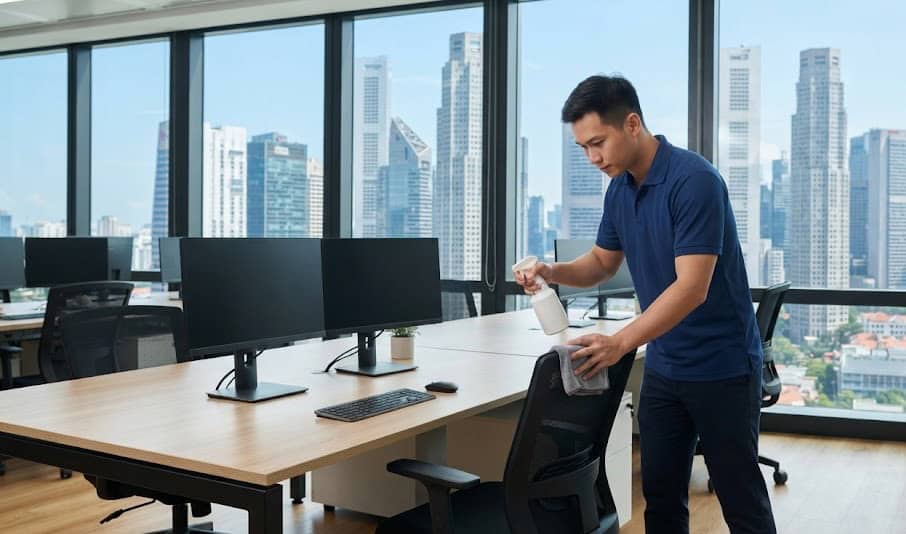
Aligning commercial cleaning schedules with peak office attendance days optimizes facility budgets while maintaining high hot-desking hygiene standards.
Rethinking Corporate Sanitation: Why Rigid Daily Office Cleaning is Obsolete
The landscape of commercial real estate across Singapore has undergone a permanent shift. Following the implementation of the Ministry of Manpower’s (MOM) Flexible Work Arrangement (FWA) guidelines, corporate offices in Raffles Place, Marina Bay, Suntec City, and One-North no longer operate at 100% daily occupancy. Walk through any Grade-A office tower on a Monday morning or Friday afternoon, and you will see vast rows of empty hot-desks. Yet, many facility managers continue paying for traditional 5-day fixed daily cleaning contracts designed for pre-pandemic working patterns.
Paying a full-time cleaning crew to wipe down empty desks and vacuum untouched carpet tiles on low-footfall days wastes corporate operating budgets. Worse, traditional daily routines often focus on superficial tasks—such as emptying half-empty waste bins—while neglecting the intensive sanitization required for shared hot-desking stations on high-attendance days.
Modern facility management requires shifting to a dynamic hybrid office cleaning schedule. By aligning cleaning frequency and manpower deployment with real employee footfall metrics, office managers can optimize operational spend while elevating hygiene standards across high-traffic communal zones.
The Hot-Desking Hygiene Dilemma: Shared Equipment and Surface Bacteria
Hot-desking maximizes real estate efficiency, but it introduces distinct biological challenges to commercial workspaces. In a traditional office setup, an employee uses the same desk, keyboard, mouse, and chair for years. In a hybrid workspace, a single workstation may be occupied by four different employees across five business days.
This rapid turnover turns shared surfaces into high-volume microbial transfer points. Microscopic skin cells, sebum oils, respiratory droplets, and coffee spills accumulate quickly on monitor power buttons, desk height-adjustment panels, shared docking stations, and acoustic booth door handles. Without targeted anti-bacterial cleaning between peak working days, hot-desking environments can accelerate seasonal flu transmission among team members.
Singapore CBD Office Attendance vs. Surface Bacterial Accumulation
Comparing daily employee footfall percentages with microbial load growth on uncleaned hot-desks versus a targeted hybrid cleaning schedule.
Hybrid Office Sanitation Matrix: Structuring Your Weekly Cleaning Schedule
Restructuring commercial cleaning requires evaluating every zone of your office layout. A modern corporate office consists of distinct functional areas: open-plan hot-desking zones, executive boardrooms, soundproof focus booths, communal pantries, and washrooms. Each zone experiences different footfall patterns throughout the week.
Rather than treating the entire 5,000-square-foot floor plate with identical daily cleaning, a flexible work office cleaning framework concentrates effort where human interaction is highest.
| Workspace Zone | Hybrid Footfall Impact | Optimal Cleaning Frequency | Key High-Touch Sanitization Tasks | Budget Efficiency Rating |
|---|---|---|---|---|
| Shared Hot-Desking Stations | Heavy turnover on Tuesdays, Wednesdays, and Thursdays; low presence on Mondays and Fridays. | 3x Weekly (Tue/Thu evening deep clean, Wed touch-up) | Disinfect dual monitors, desk height controls, power points, and chair armrests using alcohol-based wipes. | High (Eliminates wasted Monday/Friday cleaning) |
| Meeting Rooms & Phone Booths | High utilization during mid-week client presentations and team stand-ups. | 3x Weekly (Post-peak day sanitization) | Sanitize conference touchscreens, HDMI cables, glass door handles, and acoustic booth walls. | High (Focuses spend on active collaborative hubs) |
| Communal Pantries & Coffee Stations | Concentrated food waste and spillages during lunch peak hours regardless of attendance. | Daily or 4x Weekly (Mandatory hygiene zone) | Scrub sink basins, sanitize microwave door handles, wipe coffee machine buttons, and empty organic waste. | Critical (Prevents pest attraction and odors) |
| Restrooms & Wash Basins | Usage scales directly with daily office attendance; heavy midweek load. | 3x to 5x Weekly (Scales with attendance) | Disinfect toilet flush levers, washbasin taps, door latches, and replenish soap dispensers. | High (Maintains corporate health standards) |
| Reception & Storage Rooms | Low daily touchpoints; primary function is aesthetic impression and parcel receiving. | 1x or 2x Weekly (Periodic maintenance) | Dust reception counter, mop entrance marble/vinyl, wipe parcel drop-off shelves, and vacuum main rug. | Medium (Prevents unnecessary daily dusting) |
Designing a High-Efficiency Hybrid Office Cleaning Schedule
How do facility managers transition from a legacy 5-day contract to a high-efficiency hybrid schedule? It begins with analyzing actual access card turnstile data or desk-booking system analytics. In most Singapore commercial buildings, office attendance peaks on Tuesdays and Wednesdays, remains steady on Thursdays, and drops sharply on Mondays and Fridays.
Aligning Cleaning Visits with Peak Occupancy Days
Instead of deploying a cleaning technician for 2 hours every evening from Monday to Friday, restructure the contract into 3 targeted, high-intensity sessions per week:
- Tuesday Evening (Post-Peak Session 1): Perform a comprehensive deep clean following the first major wave of weekly office attendance. Thoroughly sanitize all used hot-desks, clear pantry food waste, clean restrooms, and mop main traffic corridors.
- Thursday Evening (Post-Peak Session 2): Conduct a second deep sanitization sweep covering collaborative meeting spaces, phone booths, shared monitors, and pantry appliances after the mid-week busy period.
- Saturday Morning or Monday Early Hours (Pre-Week Reset): Complete general floor vacuuming, glass door buffing, trash removal, and restroom preparation so the office opens spotless for the upcoming work week.
This 3-day structured model reduces total monthly billable cleaning hours by 25% to 40% while ensuring that surfaces are disinfected directly after high-use periods.
Focus Areas: High-Touch Electronic Surface Protocols
Hot-desking hygiene in Singapore offices requires specialized handling of sensitive corporate IT assets. Cleaning staff must be trained to sanitize electronic peripherals safely without causing fluid damage or hardware downtime.
Commercial cleaning technicians use isopropyl alcohol-based micro-emulsions sprayed onto microfiber cloths—never sprayed directly onto electronics. High-touch electronic touchpoints include dual-monitor control buttons, USB-C docking station cables, wireless mouse pads, desk power grommets, and electric standing desk keypads. Properly trained part-time cleaning helpers ensure these shared peripherals remain hygienic without risking equipment damage.
Absolute Cleaning provides specialized corporate and commercial office cleaning services across Singapore, backed by a physical office address and direct local account management. Our team works directly with office managers and HR directors to design flexible, footfall-aligned cleaning schedules that keep hybrid workspaces hygienic and cost-effective.
Hot-Desking Hygiene Singapore: Restructuring Communal Equipment Protocols
Implementing a successful hybrid office model requires a combination of clear internal workplace policies and specialized external cleaning support. When multiple employees share the same physical desk across a work week, personal accountability must meet professional sanitation standards.
Many modern Singapore firms adopt a strict “Clean Desk Policy.” Employees are required to clear all personal papers, coffee cups, and stationery items from hot-desking surfaces before leaving the office at the end of the day. This policy provides a completely clear surface for evening cleaning technicians to disinfect desk tops, power grommets, and monitor arms without touching confidential documents or personal belongings.
Acoustic phone booths and focus pods require special attention. These micro-spaces are heavily utilized for video calls and private meetings throughout peak days. Because these pods feature soundproofing foam, felt wall linings, and enclosed glass doors, humidity and exhaled respiratory droplets build up quickly inside. Cleaning protocols must include wiping down internal glass doors, sanitizing small laptop ledges, and spraying anti-microbial fabric mist on acoustic wall panels to maintain fresh air inside sealed booths.
Pantry and Restroom Sanitation: Managing High-Traffic Spike Zones
While open-plan desk areas experience fluctuating attendance, communal pantries and restrooms experience intense usage spikes on Tuesdays, Wednesdays, and Thursdays. During mid-week lunch hours, dozens of employees gather in the pantry to heat up meals, brew coffee, and wash food containers. This high-density activity creates a rapid accumulation of organic food debris, milk spills, and wet sink surfaces.
Allowing food waste or coffee spills to sit in pantry bins overnight encourages pest activity, including ants and cockroaches. Even if your overall cleaning contract is scaled back on low-attendance days, pantry hygiene must remain uncompromising:
- Coffee Machine & Appliance Sanitization: Wipe down espresso machine touchscreens, steam wands, microwave handles, and refrigerator door grips with food-safe disinfectant wipes.
- Sink Basin & Trash Management: Scrub stainless steel sink basins, flush drain strainers to clear coffee grounds, and empty organic food waste bins every evening after peak days.
- Restroom Sanitization: Disinfect washbasin taps, soap dispenser push-buttons, toilet flush handles, and door locks to prevent cross-contamination across team members.
4-Step Facility Manager Audit for Hybrid Office Sanitation
Follow this checklist to evaluate your current commercial cleaning vendor contract against real office attendance patterns:
- Review Attendance Analytics: Examine door access card logs or desk-booking software to identify your exact peak (Tue–Thu) and low-footfall (Mon/Fri) occupancy days.
- Calculate Wasted Cleaning Hours: Determine how many billable cleaning hours are currently spent wiping empty desks or vacuuming untouched carpet tiles on quiet days.
- Restructure to Footfall-Based Visits: Shift your cleaning scope from a rigid 5-day daily contract to a 3-day or 4-day targeted schedule focused on post-peak evening resets.
- Implement IT-Safe Sanitization Protocols: Ensure your cleaning vendor uses non-conductive, alcohol-based micro-emulsions and microfiber cloths for shared monitors and docking stations.
Commercial Cleaning Budget Allocation: Fixed vs. Flexible Hybrid Model
Reallocating commercial cleaning dollars from low-occupancy days to targeted high-density sessions optimizes your facility budget. The chart below illustrates how funds are spent under a traditional daily contract versus an optimized hybrid cleaning schedule.
Monthly Commercial Cleaning Budget Spend Efficiency (SGD)
Comparing budget utilization and spend efficiency between a rigid 5-day contract and an optimized 3-day hybrid office cleaning contract.
Frequently Asked Questions
How does a hybrid office cleaning schedule reduce corporate facility operating costs?
By aligning cleaning manpower with actual employee attendance, office managers avoid paying for full cleaning visits on low-footfall days (such as Mondays and Fridays). Structuring cleaning into 3 or 4 targeted visits per week reduces monthly cleaning invoices by 25% to 40% while concentrating sanitization efforts right after peak working days.
What is the recommended cleaning frequency for hot-desking offices in Singapore?
For most hybrid offices operating on MOM FWA guidelines, a 3-day weekly cleaning schedule is optimal. Deep sanitization should occur on Tuesday and Thursday evenings after peak office attendance, paired with a pre-week reset session over the weekend or early Monday morning.
How do professional cleaners safely sanitize shared electronic office equipment and hot-desks?
Professional commercial cleaners use alcohol-based micro-emulsions applied directly to microfiber cloths rather than spraying liquids onto electronics. This allows safe wiping of dual monitors, USB-C docking stations, keyboard trays, electric standing desk keypads, and conference room touchscreens without causing short circuits.
Can part-time commercial cleaning services adapt to fluctuating weekly employee attendance?
Yes. Part-time commercial cleaning services offer complete contractual flexibility, allowing facility managers to adjust cleaning visit days, scope, and duration as office attendance policies evolve or seasonal attendance changes occur.
Restructuring Your Commercial Office Cleaning for 2026 and Beyond
Adopting flexible work guidelines requires updating how commercial facilities are maintained. Rigid, pre-pandemic daily cleaning contracts no longer serve modern hybrid workplaces. By shifting to a dynamic, footfall-aligned cleaning schedule, facility managers can reduce unnecessary operating overhead while delivering higher sanitization standards where they matter most.
Focused hot-desking disinfection, targeted pantry hygiene, and professional IT-safe equipment cleaning ensure that your shared office remains a safe, professional, and welcoming environment for your entire workforce.
Absolute Cleaning provides tailored corporate and commercial office cleaning services across Singapore. Operating with a local office presence and direct local account management, our team works directly with facility managers, office administrators, and HR directors to build flexible, high-efficiency cleaning routines. Contact Absolute Cleaning today to request a customized hybrid office cleaning proposal for your business.


